The role of design in marketing has changed significantly. What was once treated as a supplement has become a central part of strategy. From its early use in print media to today’s digital and interactive formats, the journey of marketing design highlights its growing influence. In recent years, the very definition of marketing design has expanded, moving far beyond its print origins.
According to an Adobe survey, 73% of businesses now prioritize design investment to stand out in a competitive market. This underlines the importance of design as a driving force in the digital space. Marketing design today spans a diverse spectrum, encompassing visually engaging social media content to seamlessly immersive interactive website interfaces. This multifaceted approach plays a critical role not only in shaping brand identity but also in enhancing the overall customer experience. As marketing continues to evolve, the definition and significance of marketing design evolve in tandem, solidifying its integral role in capturing attention, conveying brand messages, and influencing consumer behavior.
Unveiling Design Types
Great design is never one-dimensional. It blends disciplines to shape a brand’s identity and build meaningful connections with people. Let’s look at some of the key types that shape marketing today.
a. Graphic Design
Graphic design as a discipline is rooted in visual communication. It serves as a linchpin for crafting compelling marketing collateral and fostering brand recognition.
It emerges as a powerhouse, with statistics from the Design Management Institute indicating that design-led companies have outperformed the S&P Index by an impressive 219% over a decade.
b. Web Design
A brand’s online presence often begins with web design, making it central to how customers experience the business. According to Stanford Persuasive Technology Lab, a staggering 75% of users acknowledge making judgments about a company’s credibility based on its website design.
Effective web design transcends aesthetics; it is non-negotiable for enhancing user experience and wielding a significant impact on conversion rates.
c. Multimedia Design
Multimedia design has risen to prominence fueled by the growing popularity of video content. HubSpot reports that 54% of consumers want more video content from businesses they support.
This form of design, encapsulating video, animations, and interactive elements, provides businesses with engaging avenues to connect with audiences across diverse platforms.
d. UX/UI Design
Expanding beyond traditional design realms, UX/UI design steps onto the stage, focusing on crafting seamless and user-friendly interactions with digital products.
Studies, such as those conducted by Forrester, emphasize the substantial return on investment, highlighting the pivotal role of UX/UI design in enhancing user satisfaction and overall business success.
e. Product Design
Additionally, product design takes center stage, whether in the creation of physical or digital products. Prioritizing functionality, aesthetics, and user experience, well-designed products significantly contribute to customer satisfaction and loyalty.
This holistic approach, encompassing graphic, web, multimedia, UX/UI, and product design, forms the bedrock of a comprehensive and impactful design strategy for businesses across diverse sectors. As the design landscape evolves, these disciplines collectively shape a brand’s narrative, leaving a lasting imprint on its audience.
Improve Marketing Design
Elevating your marketing design game goes beyond the surface; it’s about weaving a cohesive and impactful visual narrative that resonates with your audience. As businesses strive to thrive in the digital landscape, implementing proven tips becomes imperative for not only building brand identity but also for engaging audiences and driving overall business success.
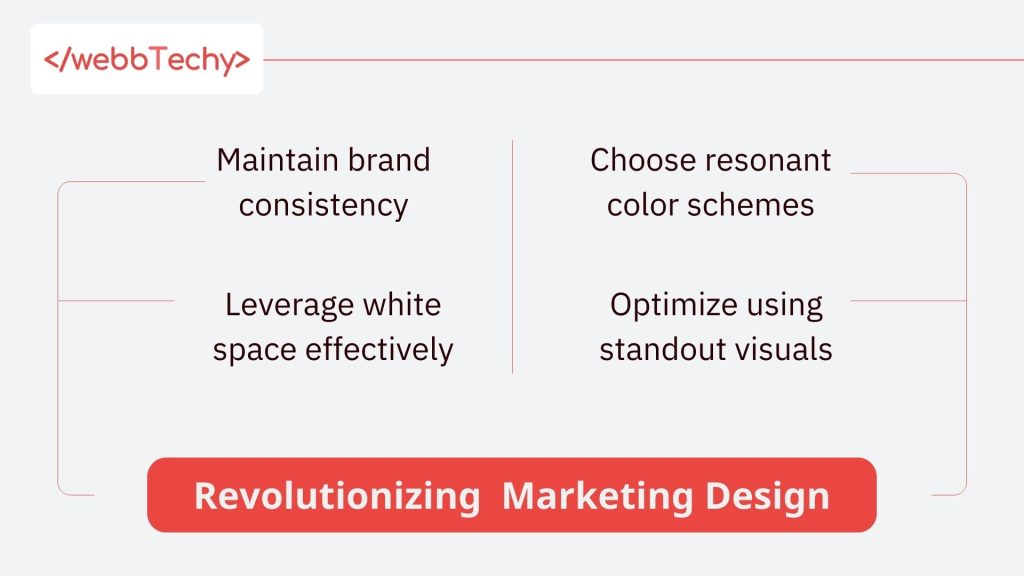
a. Maintaining Brand Consistency
Consistency is the cornerstone of brand recognition. According to Lucidpress, a steadfast brand presentation across all platforms can increase revenue by up to 23%.
The establishment of comprehensive brand guidelines for design elements ensures a uniform and instantly recognizable brand image. This consistency doesn’t just create visual harmony; it fosters trust and loyalty among consumers
b. Choosing Resonant Color Schemes
The power of color in influencing consumer behavior is undeniable.
Research from the Pantone Color Institute reveals that up to 90% of snap judgments about products can be based on color alone.
Selecting colors that not only align with brand values but also evoke desired emotions can significantly impact consumer perception. A thoughtful color palette isn’t just visually appealing; it’s a strategic tool for shaping the emotional connection between your brand and your audience.
c. Leveraging White Space Effectively
Whitespace is not mere emptiness; it’s a powerful design element that can enhance comprehension and guide the viewer’s focus. Research from Crazy Egg indicates that proper use of whitespace can increase comprehension by up to 20%.
Thoughtful incorporation of whitespace in design isn’t just about aesthetics; it’s about creating a visual hierarchy that enhances the overall user experience.
d. Secrets of Standout Visuals
In a digital era saturated with content, standing out is a considerable challenge. Visuals, however, possess the unique ability to captivate audiences. According to MDG Advertising, visual content receives a staggering 94% more views than text-only content.
To truly stand out, visuals must not only be aesthetically pleasing but also strategically crafted to convey the intended message swiftly and effectively. This involves understanding your audience, tailoring visuals to resonate with their preferences, and consistently refining your visual storytelling.
Conclusion
As the digital landscape evolves, marketing design remains a linchpin in the success of businesses. The synthesis of maintaining brand consistency, choosing resonant color schemes, leveraging whitespace effectively, and creating standout visuals is the key to leaving a lasting impression.
By staying abreast of the ever-evolving definition of marketing design and implementing these proven tips, businesses can navigate the complexities of the digital realm, creating a visual language that not only engages but also resonates with their audience on a profound level.